
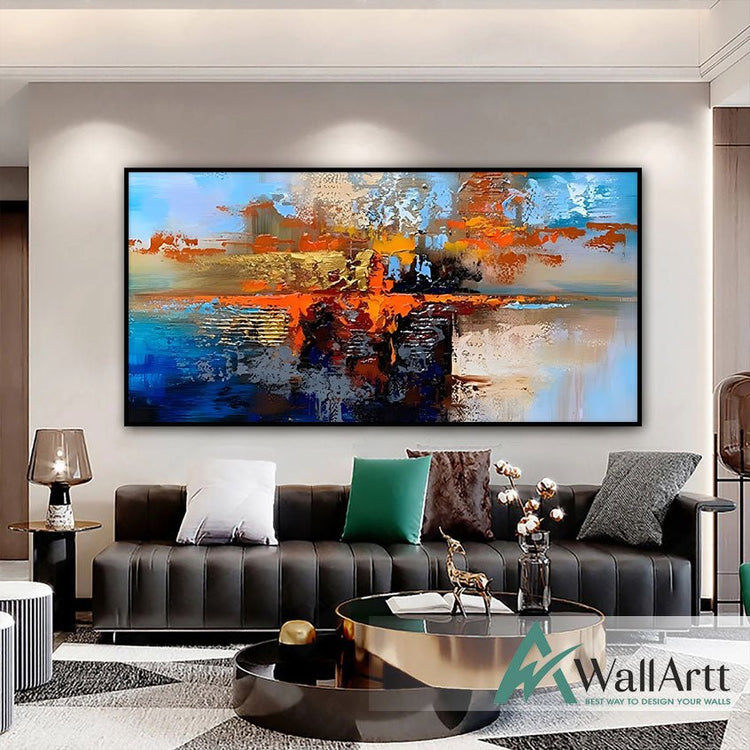
In short: the best dining room wall art is one statement piece centred above the sideboard or on the main wall, roughly two-thirds the width of the furniture beneath it, with its centre at about eye level when seated. Warm colours and textured paintings work especially well, because they look inviting in the evening under lamps and candles.
What makes dining room wall art different?
A dining room is mostly seen from a seated position and often in the evening. That changes how art should be chosen and hung. Pieces can sit slightly lower than in a living room, colours should look good under warm artificial light, and the artwork should spark a little conversation without dominating the meal. Textured paintings are ideal here: the raised paint creates soft shadows when lamps are lit.

Dining room wall art ideas
1. A statement abstract above the sideboard
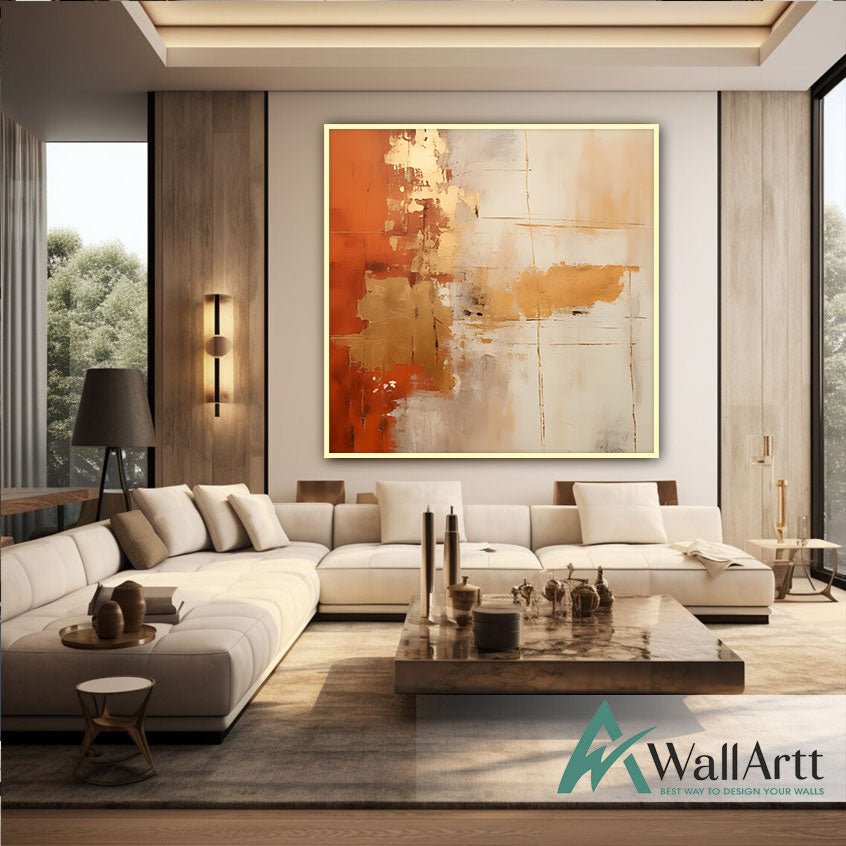
A bold abstract gives guests something to talk about. Try warm tones such as orange, terracotta and gold – for example Gold Foil on Orange or Orange Beige Abstract.
2. Rich reds for an intimate feel
Red is traditionally associated with appetite and warmth. A piece like Royal Red Abstract or Abstract Red Waves makes a dining room feel cosy and sociable.
3. Calm blues for open-plan kitchen-diners
In open-plan spaces, a cooler piece balances busy kitchen surfaces. Navy and gold works particularly well – see our navy and gold wall art guide.
4. A pair or set along a long wall
Two or three pieces hung in a line suit a long dining table. Keep 5–8 cm between panels so they read as one composition.
5. Florals for a relaxed, garden feel
Textured flowers soften a formal room and suit country or Scandinavian styles. Browse our 3D flowers and nature collection.
How big should dining room wall art be?
| Where | Suggested size |
|---|---|
| Above a 150–180 cm sideboard | 100–120 cm wide |
| On the wall behind a 6-seater table | 120–150 cm wide, or a 2–3 piece set |
| Small dining nook | 60–90 cm wide, square or portrait |
Leave 20–25 cm between the top of a sideboard and the bottom of the frame. On an open wall, hang the centre of the painting slightly lower than in a living room – around 140–145 cm from the floor – so it is comfortable to view when seated. Our size guide explains the two-thirds rule in more detail.
Practical tips for dining rooms
- Avoid steam and splashes: keep paintings away from hobs, kettles and radiators.
- Choose warm lighting: 2700–3000K bulbs flatter both the art and the food.
- Match one colour: pick a tone already in your chairs, rug or tableware.
- Clean gently: dust with a soft, dry brush; avoid sprays.
Frequently asked questions
What is the best art for a dining room?
A single statement painting in warm or rich colours usually works best. Textured abstracts and florals are popular because they look inviting in evening light.
How high should a painting hang in a dining room?
Slightly lower than elsewhere: around 140–145 cm to the centre on an open wall, or 20–25 cm above a sideboard.
Should dining room art match the living room?
In open-plan homes, choose pieces that share at least one colour so the spaces feel connected. In separate rooms, the dining room can be bolder.
Can I hang textured art in a kitchen-diner?
Yes, as long as it is away from direct steam and grease. A wall on the dining side of the room is ideal.
Where can I buy dining room wall art in the UK?
WallArtt offers textured and 3D wall art with free UK delivery and unconditional 14-day returns.
Related reading
- Navy and gold wall art: styling ideas
- What size wall art do I need?
- How to hang wall art (renter-friendly options)
Explore our best sellers, see what is new in, or read our FAQs.
