
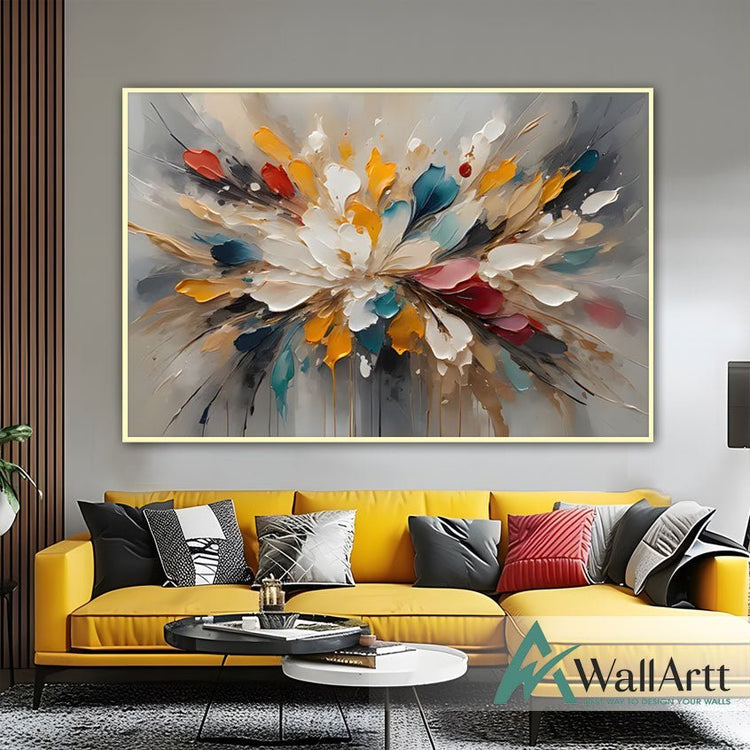
In short: textured wall art is artwork with a raised, three-dimensional surface you can see and feel. Instead of being completely flat like a poster or canvas print, it has layers of paint, ridges and sculpted shapes that catch the light and cast soft shadows. It is one of the most popular ways to add depth, warmth and a handmade feel to UK homes.
What is textured wall art?
Textured wall art is any painting or wall piece where the surface itself is part of the design. Artists build up paint – usually acrylic or oil – with palette knives, brushes or modelling paste, so petals, waves, branches or abstract shapes stand out from the canvas. Because the surface is not flat, the artwork changes throughout the day as natural light moves across the room, and it looks different again in the evening under lamps.
You will see it described in several ways: textured art, textured paintings, 3D wall art, impasto art, palette knife art or relief art. They all describe the same idea – artwork with real physical depth.
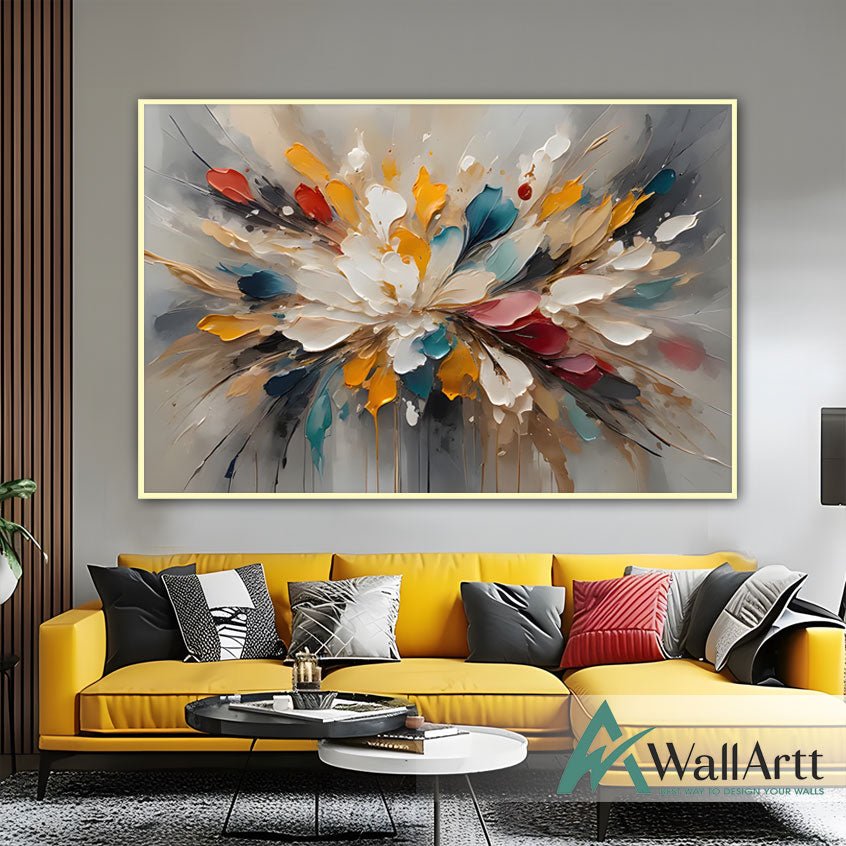
The main types of textured wall art
| Type | What it is | Best for |
|---|---|---|
| 3D heavy textured | Thick, sculpted layers of paint across much of the canvas, often applied with a palette knife. | Statement walls, living rooms, open-plan spaces |
| Textured partial | A detailed design on canvas with hand-painted texture added to selected areas, such as petals, gold or highlights. | Bedrooms, offices, famous painter reproductions |
| Impasto / original | Fully hand-painted artwork with thick brushwork throughout. | Collectors and one-off commissions |
| Mixed media relief | Plaster, fabric, wood or other materials built up on a panel. | Minimalist and Scandinavian-style rooms |
At WallArtt we specialise in the first two. Our 3D heavy textured paintings make a bold statement, while our textured partial paintings offer a subtler finish.
How is textured wall art made?
- Design: the composition is printed on high-quality canvas, which gives accurate colour and detail.
- Texture: artists hand-apply acrylic paint with palette knives and brushes, building up raised layers on the key areas.
- Drying: thick layers need time to dry and harden completely.
- Finishing: the canvas is stretched on a wooden frame and, if chosen, framed in gold, black, silver, white or antique gold.
Because each piece is finished by hand, no two are exactly the same. Small variations in texture are part of the charm. Read more in our guide to textured partial paintings.
Textured wall art vs canvas prints
- Depth: a canvas print is flat; textured art has real raised paint you can see from across the room.
- Light: texture creates shadows and highlights, so the artwork feels alive rather than static.
- Feel: textured pieces look and feel handmade, closer to an original painting.
- Price: textured art costs more than a print but far less than a fully original commission.
Is textured wall art still in style?
Yes. Textured wall art is one of the leading interior trends for 2026, driven by a move towards handmade, tactile and natural-looking homes. Earthy colours, organic shapes and visible brushwork all fit the trend. See our article on interior design trends for 2026.
Where to hang textured wall art
- Above the sofa: choose a piece about two-thirds the sofa's width. See our sofa wall art guide.
- Above the bed: softer colours and gentle texture create a calm, hotel-style feel.
- Hallways and stairs: a vertical textured piece adds interest where furniture will not fit.
- Opposite or beside a window: side light shows texture at its best.
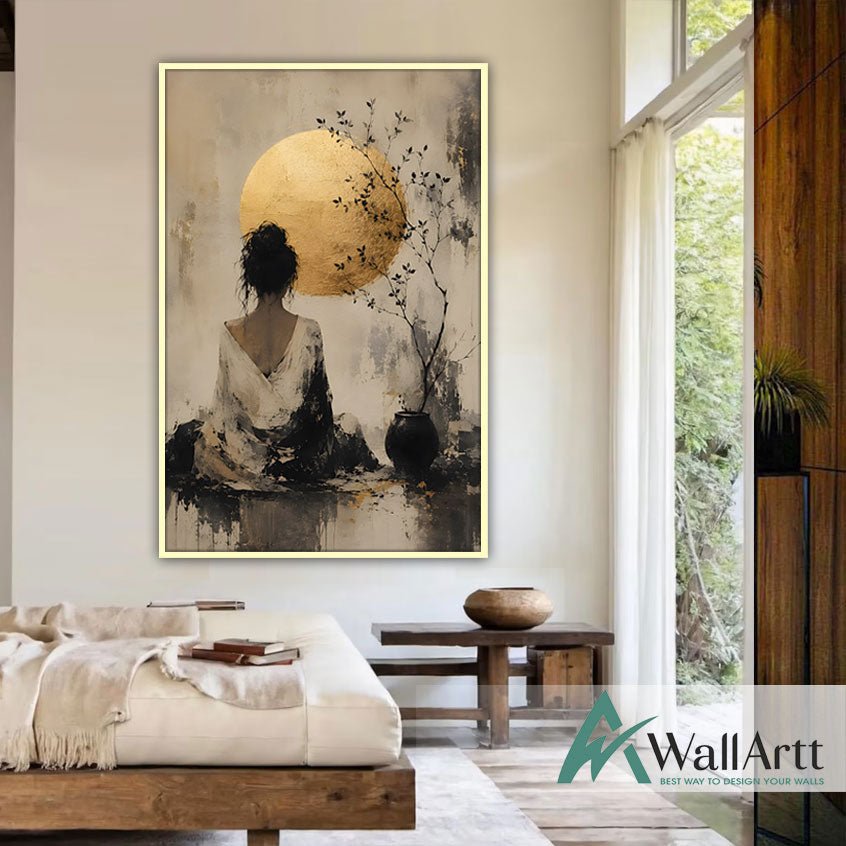
How to choose the right textured wall art
- Start with size: measure the wall and furniture first. Our size guide has a full chart for UK rooms.
- Pick the level of texture: bold 3D for statement walls, textured partial for calmer spaces.
- Match one colour: repeat a shade already in your cushions, rug or curtains.
- Choose the subject: abstract, flowers and nature or landscapes.
- Plan the lighting: warm-white side lighting makes texture stand out. See our lighting guide.
How to care for textured wall art
Dust gently with a soft, dry brush or cloth. Avoid sprays, wet cloths and harsh cleaning products. Keep the artwork away from damp walls, radiators and long periods of strong direct sunlight.
Frequently asked questions
What is textured wall art called?
It is also known as textured art, 3D wall art, impasto art, palette knife art or relief art. All describe artwork with a raised, physical surface.
Is textured wall art the same as 3D wall art?
They overlap. "3D wall art" usually means pieces with very thick, sculpted texture, while "textured wall art" also includes subtler finishes where only some areas are raised.
Is textured art hand-painted?
The texture is. At WallArtt, every design is printed on canvas and then hand-finished by our artists with acrylic paint, so each piece has its own small variations.
Does textured wall art work in small rooms?
Yes. Choose a medium size in lighter tones. Texture adds depth without making a small room feel crowded.
Where can I buy textured wall art in the UK?
WallArtt sells textured and 3D wall art online with free UK delivery and unconditional 14-day returns. Browse our best sellers to see the most popular pieces.
Related reading
- Bedroom wall art ideas: what to hang above the bed
- Navy and gold wall art: styling ideas
- 3D wall art for living rooms: 12 ideas for UK homes
- Cream and gold wall art: styling ideas
- Discover the beauty of textured 3D wall art
Explore our best sellers, see what is new in, or read our FAQs.
