
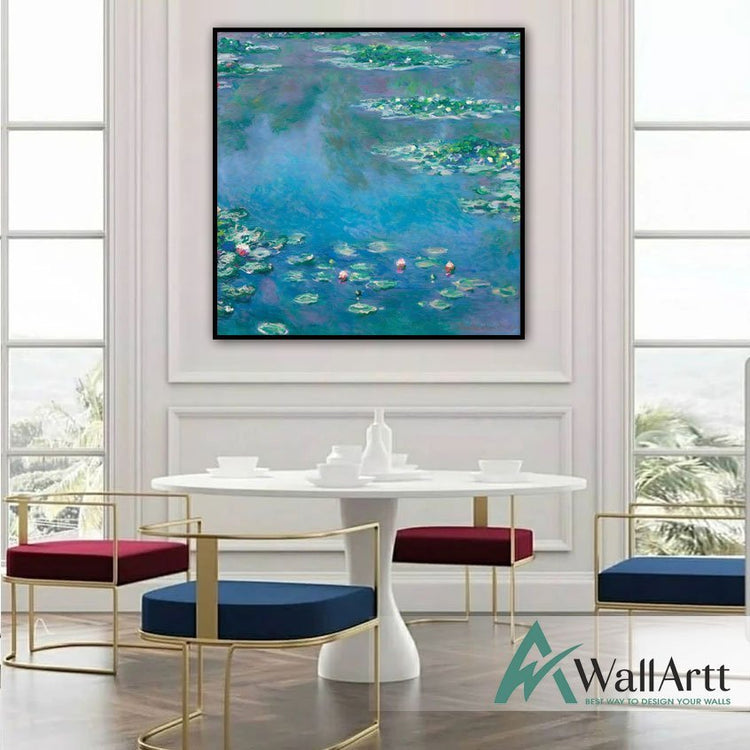
Claude Monet's Water Lilies are among the most loved paintings in the world. Soft reflections, floating blossoms and shimmering light make them feel calm and timeless – which is exactly why lily paintings are such a popular choice for living rooms and bedrooms today. In this guide we look at how Monet created the series, where you can see the originals, and how to choose and style a water lily painting for your own home.
How Monet's Water Lilies began
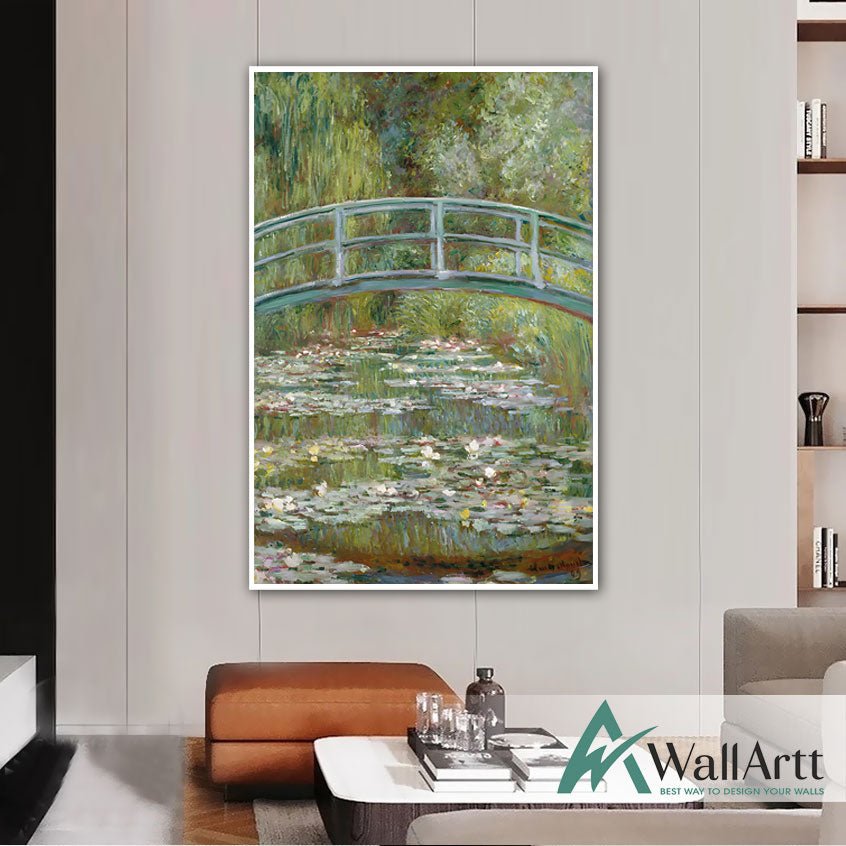
In 1883 Monet moved to the village of Giverny in Normandy, north-west of Paris. A decade later he bought a neighbouring plot of land and created a water garden, filling a pond with water lilies and adding a Japanese-style footbridge surrounded by willows, irises and bamboo. He designed the garden himself – and then spent almost three decades painting it.
From the late 1890s until his death in 1926, Monet painted around 250 works of the lily pond. Rather than painting the garden as a whole, he focused more and more closely on the surface of the water: the lily pads, the flowers and the reflections of the sky and trees. In his later years his eyesight was affected by cataracts, and many of the final canvases became larger, freer and richer in colour.
Where can you see Monet's Water Lilies?
The most famous display is at the Musée de l'Orangerie in Paris, where Monet's huge panoramic water lily panels fill two oval rooms, surrounding visitors with water and light. Water lily paintings are also held by major museums around the world – and here in the UK, the National Gallery in London has examples from the series. Monet's house and garden in Giverny are open to visitors in spring, summer and early autumn, so you can stand on the famous bridge yourself.
Why lily paintings feel so calming
- Water and reflections: scenes of still water are naturally restful and give a room a sense of space.
- Soft, blended colours: blues, greens, lilacs and soft pinks sit gently together without strong contrasts.
- No fixed horizon: many of the paintings show only the water's surface, so the eye drifts across the canvas rather than focusing on one point.
- Nature indoors: flowers and greenery bring a feeling of a garden into the home, even in a city flat.
Monet-inspired and modern lily paintings
You do not have to choose a classic Monet to enjoy lilies on your wall. Our range includes faithful textured versions of the series and modern interpretations:
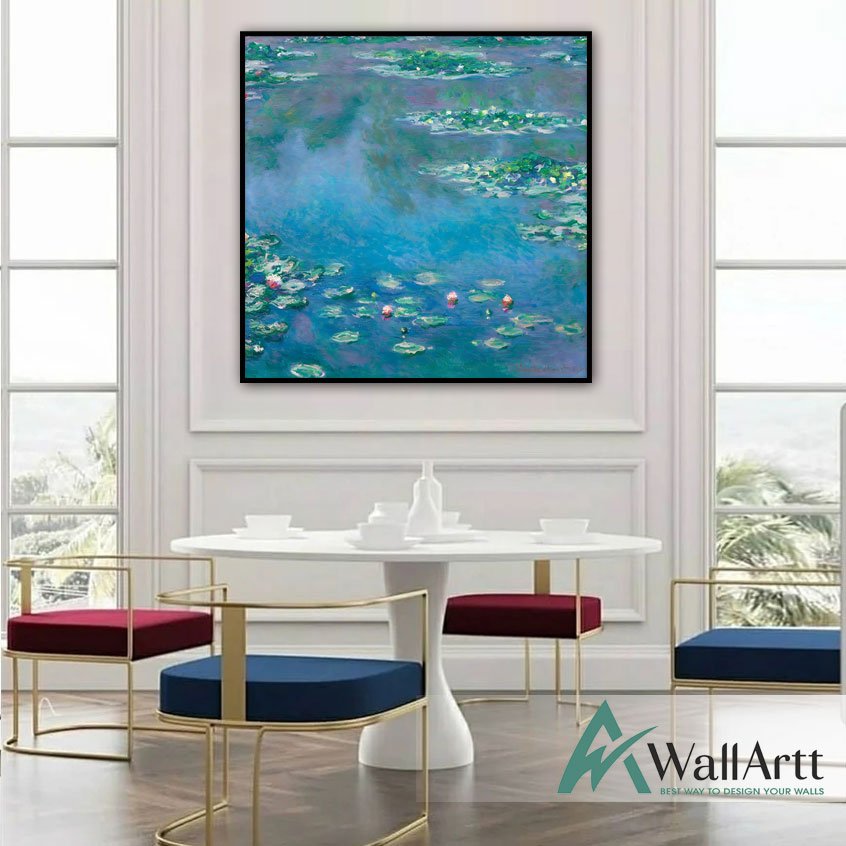
- Water Lilies by Monet, Water Lilies II, Water Lilies III and Water Lilies IV – the classic pond scenes in blues, greens and pinks.
- The Japanese Bridge by Monet – the famous footbridge over the lily pond.
- White Water Lilies 3D – thick, sculpted petals for a bold modern statement.
- Lilies 3D – heavy palette-knife texture with a fresh floral feel.
- Abstract Floating Lilies and Enchanted Water Lilies – contemporary takes on the lily pond.
How to style a water lily painting at home
Living room
A wide lily painting above the sofa creates a calm focal point. Blues and greens work beautifully with sage, soft grey, white and natural wood. Aim for a painting about two-thirds the width of the sofa – our guide to wall art above a sofa explains sizing and height.
Bedroom
Few subjects are as restful above a bed. Pick up a lilac or blush pink from the painting in your cushions or throw for a soft, coordinated look.
Bathroom, hallway and garden room
Water scenes suit a hallway, a garden room or a conservatory. In bathrooms, choose a well-ventilated spot away from direct splashes and steam.
Lighting
Warm-white side lighting brings out the raised paint on the petals and the movement on the water. See our guide to lighting textured art.
Textured lily paintings: how they are made
Each WallArtt lily painting starts as a high-quality print on canvas. Our artists then hand-finish the key areas – petals, lily pads and reflections – with acrylic paint, adding real raised texture. On our 3D pieces, thick layers are sculpted with a palette knife so the flowers stand out from the canvas. Every painting arrives stretched and ready to hang, with optional gold, black, silver, white or antique gold frames. Learn more in our guide to textured partial paintings.
Other Monet paintings to explore
- Woman with a Parasol – a breezy summer scene full of light.
- Poplars and Poplars on the Epte River – tall, elegant trees for portrait walls.
- Garden at Vétheuil – sunflowers and garden paths in warm colours.
For more famous artists, read From Van Gogh to Klimt: bringing famous painters' art into your home.
Frequently asked questions
How many Water Lilies paintings did Monet make?
Monet painted around 250 works of his water lily pond at Giverny, from the late 1890s until his death in 1926.
Where are Monet's Water Lilies in the UK?
The National Gallery in London has paintings from the series. The largest display in the world is at the Musée de l'Orangerie in Paris.
What do water lilies symbolise in art?
Water lilies are often linked with calm, renewal and peace, as they open each day on still water. In Monet's work they also reflect his fascination with light, colour and the changing seasons.
Which colours go with a water lily painting?
Sage, soft greys, white, natural wood and pale lilac all work well. For a richer look, pair the blues and greens with deep navy or a touch of gold.
Are your lily paintings real oil paintings?
They are textured partial paintings: a high-quality print on canvas, hand-finished by our artists with acrylic paint to add real texture and depth. Delivery is free across the UK, and returns are unconditional within 14 days.
Related reading
- Klimt's The Tree of Life: meaning, history and styling ideas
- From Van Gogh to Klimt: famous painters at home
- What size wall art do I need for my living room?
Explore our best sellers, see what is new in, or read our FAQs.
